That dull ache across your lower back by the end of the day. The stiffness that makes standing up from your desk feel like a small event. Back pain is one of the most common reasons people book a massage, and for good reason. This guide covers what actually causes back pain, which type of massage genuinely helps, and when it’s time to see a doctor instead of self-treating.
What causes back pain?
- Sitting for long periods. Hours at a desk puts steady pressure on your lower back and hips. Your muscles hold one position for far longer than they’re built for. This often leads to stiffness and dull, aching pain.
- Poor posture. Slouching, hunching over a laptop, or sitting without proper support all strain your spine. The muscles around it build up tension over time.
- Lifting incorrectly. Bending from your back rather than your knees is a common trigger. So is lifting something heavier than you’re used to. Both can cause sudden back pain or strain.
- Weak core muscles. Your core supports your spine more than most people realise. Weak core muscles mean your back ends up compensating. This can lead to ongoing discomfort.
- Stress. Emotional stress often shows up physically as tension in your back. This hits your lower back and shoulders especially, even without any obvious physical cause.
- Old injuries. A previous strain that never fully resolved can leave lingering tightness or weakness. This makes that area more prone to pain again down the line.
Back pain from sitting: why it’s so common
If you work at a desk, sitting is probably doing more damage than you realise. Sitting puts more pressure on your lower back than standing does, and most chairs, even good ones, don’t fully support your spine’s natural curve over a full working day. Add in a screen positioned too low or too far away, and your posture drifts further from where it should be without you noticing.
The fix isn’t necessarily a better chair, though that helps. It’s more about breaking up long stretches of sitting with movement, and making sure massage is part of your routine rather than something you only think about once the pain has built up.
When should you see a doctor about back pain?
Most back pain is manageable. It improves with rest, movement, and treatments like massage. That said, see a doctor if your pain is severe, or doesn’t improve after a few weeks. Same goes if it comes with numbness, tingling, or weakness in your legs. Pain radiating down one leg can be a sign of sciatica, so check that too. Same if your back pain follows a fall or injury. A doctor can rule out anything more serious, and confirm massage is a safe next step for you.
How can massage help with back pain?
Massage works directly on many of the physical causes behind back pain. That’s why it’s one of the most commonly recommended non-medical approaches.
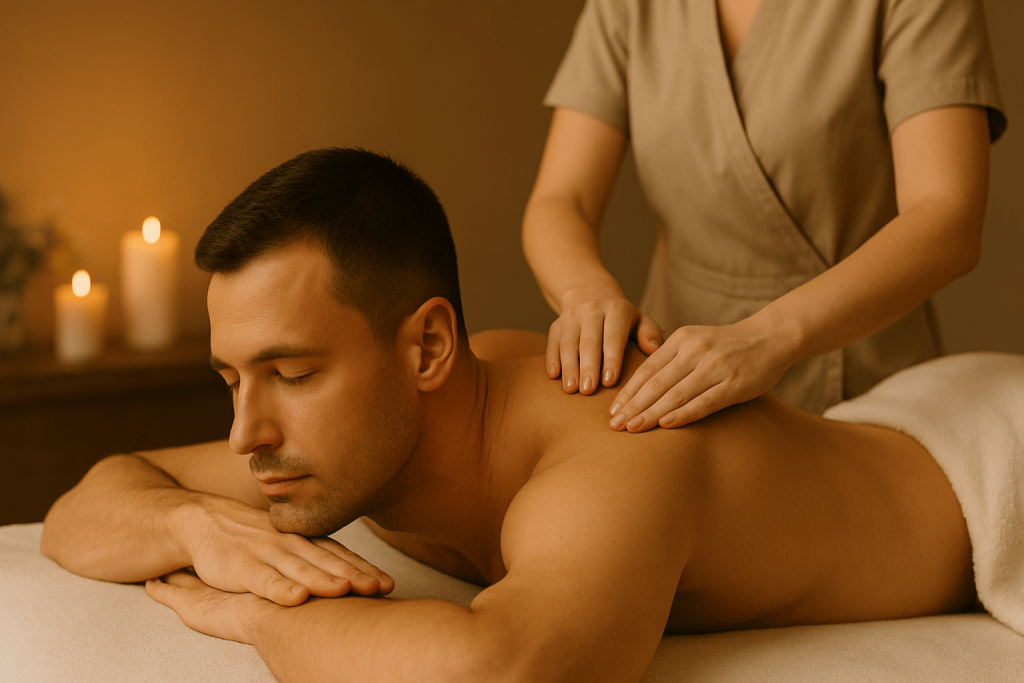
Deep tissue massage is often the best fit for chronic, deeply held tension in your back. The firmer pressure works into muscle layers a lighter touch might not fully reach. This helps with the stiffness that builds up from sitting or old tension.
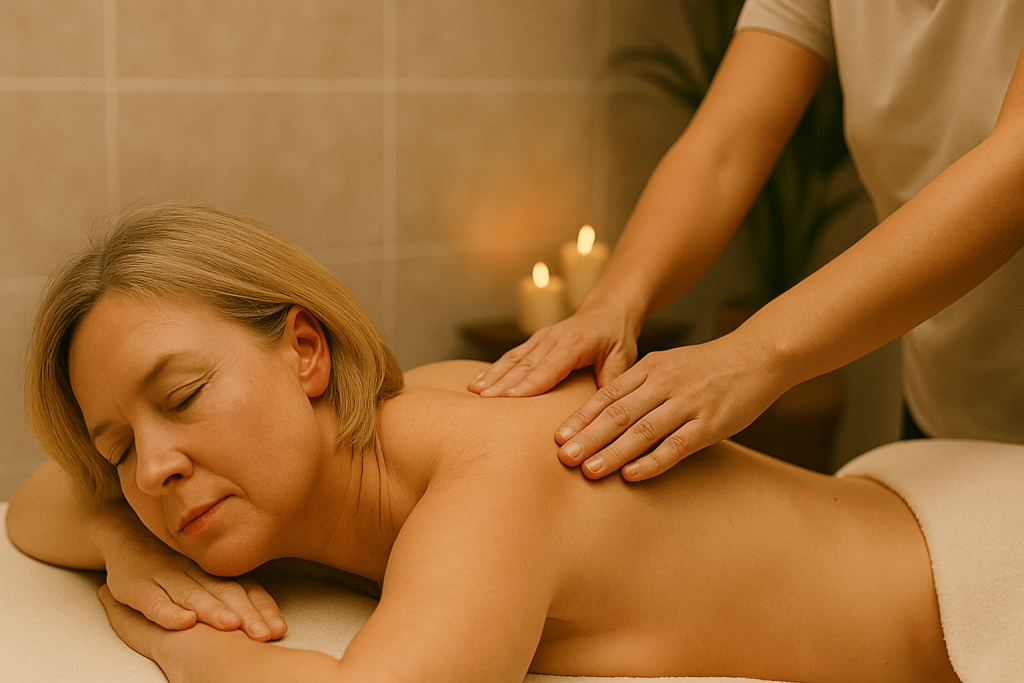
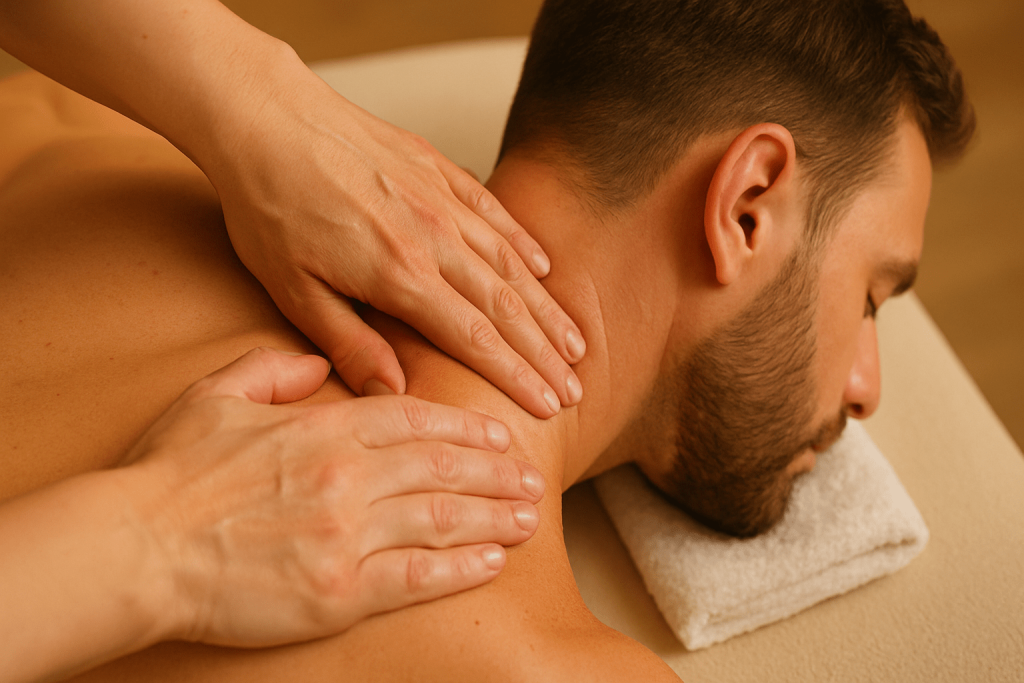
Back, neck, and shoulder massage takes a more targeted approach. It spends real time specifically on your back, rather than splitting attention across your whole body. This suits you well if your pain sits in your upper or lower back, rather than spread more generally.
Therapeutic massage is worth considering if your back pain is a specific, ongoing issue, rather than general tightness. Your therapist builds the session around your particular problem. They blend techniques as needed, rather than following one fixed approach.
Sports massage can help if your back pain comes from training or physical activity. It’s built around recovery, and the specific movement patterns that might be contributing to your discomfort.
What to expect if you book massage for back pain
Let your therapist know exactly where your pain is, and what makes it better or worse, before your session starts. This helps them focus properly, rather than treating your back as one generic area.
Expect firm, focused pressure on your affected muscles. This gets combined with broader work, to help your whole back feel more balanced. Your therapist checks in throughout, adjusting pressure based on how your body responds.
A single session can genuinely help with existing tightness. But ongoing back pain usually responds better to a short course of regular sessions, rather than a one-off visit. This matters most if the pain built up gradually over time.
Which type of massage is best for your back pain?
If your pain is deep and chronic, built up over weeks or months, deep tissue massage usually gets the best results. Is it concentrated specifically in your upper or lower back, rather than more general? Back, neck, and shoulder massage is worth considering. Managing a specific diagnosed issue? Therapeutic massage lets your therapist build a session around exactly that. And if your pain is training-related, sports massage addresses the movement patterns as well as the pain itself.
Signs it’s time to book a massage for your back
A few signs suggest now’s a good time. You’ve noticed the same ache returning in the same spot, day after day. Standing up from your desk has started to feel stiff or effortful in a way it didn’t before. You’ve tried stretching or a heat pack at home, and it’s helped a little but not enough. Or your back pain seems to track closely with how stressful or sedentary your week has been.
None of these need to be severe to justify booking. Catching back pain early, before it becomes a chronic pattern, is usually easier to treat than waiting until it’s seriously affecting your day.
Simple things you can do alongside massage
A few daily habits can support the work massage does. Take regular breaks from sitting. Stand up and move every hour if you can, since sustained stillness is one of the biggest contributors to back pain. Pay attention to your posture, especially when you’re sitting at a desk for long stretches. Build some gentle core strengthening into your routine. A stronger core takes real pressure off your back over time. And when lifting anything heavy, bend from your knees rather than your back.
None of these replace treatment for genuine back pain. But they can meaningfully reduce how often it builds up in the first place.
How often should you get massage for back pain?
For general maintenance, once every three to four weeks helps keep tension from building back up. If you’re managing a more active flare-up, weekly sessions for the first few weeks often bring better results, tapering off to a more relaxed schedule as things improve.
Frequently asked questions
Can massage really help with back pain? Yes, particularly for pain caused by muscle tension, poor posture, or sitting for long periods. Massage works directly on the physical causes behind a lot of common back pain.
Is deep tissue massage safe for back pain? Generally yes. It’s worth telling your therapist about any specific injuries or sensitive areas though, so they can adjust their approach.
What’s the difference between massage for back pain and a regular massage? Massage for back pain focuses specifically on your problem area. It adapts to what’s actually causing your discomfort, rather than following a standard full body routine.
Can massage help with sciatica? Massage can help ease some of the muscle tension that contributes to sciatica symptoms, though it’s worth discussing with a doctor first, since sciatica has a specific underlying cause that sometimes needs its own treatment.
How many sessions will I need for back pain? This varies depending on how long you’ve had the pain and what’s causing it. Many clients start noticing improvement within two to three sessions, though ongoing or chronic pain may benefit from a longer course.
Should I stretch before or after a massage for back pain? Both can help. Gentle movement before your session can warm up your muscles, and light stretching afterward can help maintain the release your therapist worked to achieve.
Ready to book?
If back pain is a regular part of your week, massage is genuinely worth trying as part of managing it. We offer deep tissue, back, neck and shoulder, therapeutic, and sports massage daily from 11am to 9pm at Unit 2A The Coombe, The Liberties, Dublin 8.
👉 Book your session, and let us know where your pain is so we can focus your treatment properly 📞 Call or text 089 252 4848 with any questions 📸 Follow us on Instagram @healing.massage.reiki.dublin for tips and real client stories
This article is for general information and isn’t a substitute for medical advice. If your back pain is severe, persistent, or comes with numbness or weakness, please speak with a doctor.