If your neck and shoulders carry the stress of every long day at a desk, Indian head massage might be exactly what you need. It’s one of the oldest massage traditions in the world, and it’s having a real moment in Dublin right now. This guide covers what it actually involves, the real benefits, and what to expect from a session.
What is Indian head massage?
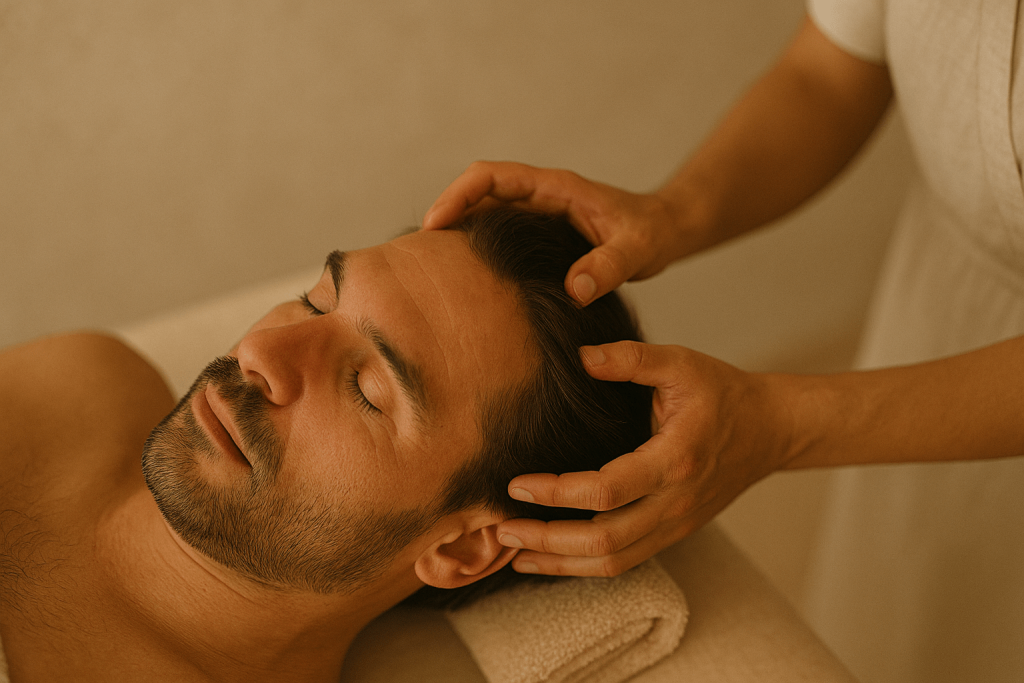
Indian head massage is a seated treatment. It focuses on your head, neck, and shoulders. A therapist uses their hands to work through these areas. Expect a mix of firm kneading, gentle strokes, and light pressure on points across your scalp.
The practice comes from a tradition in India called champissage. Families have passed it down for generations. It began as part of everyday grooming and self-care, long before it became a treatment you’d book at a clinic. That everyday history is part of why it feels so simple and effective, rather than overly technical.
Unlike a full body massage, you usually stay seated and fully clothed. There’s no need to undress or lie down. This makes it a great option if you’re short on time, or if you simply prefer to stay upright.
A brief history worth knowing
Indian head massage has roots going back thousands of years in India. It grew out of Ayurveda, a broader system of health and wellbeing that treats the body as a whole rather than a set of separate parts. Head massage was originally something families did for each other at home, often as part of a regular grooming routine, not something reserved for a special occasion.
Over time, therapists refined the technique and combined it with an understanding of pressure points across the scalp. It made its way to the West in the 1970s, where it slowly became a regular feature in massage clinics and spas. Today, it’s recognised as a stand-alone treatment, valued as much for the mental calm it brings as for the physical relief.
How does Indian head massage work?
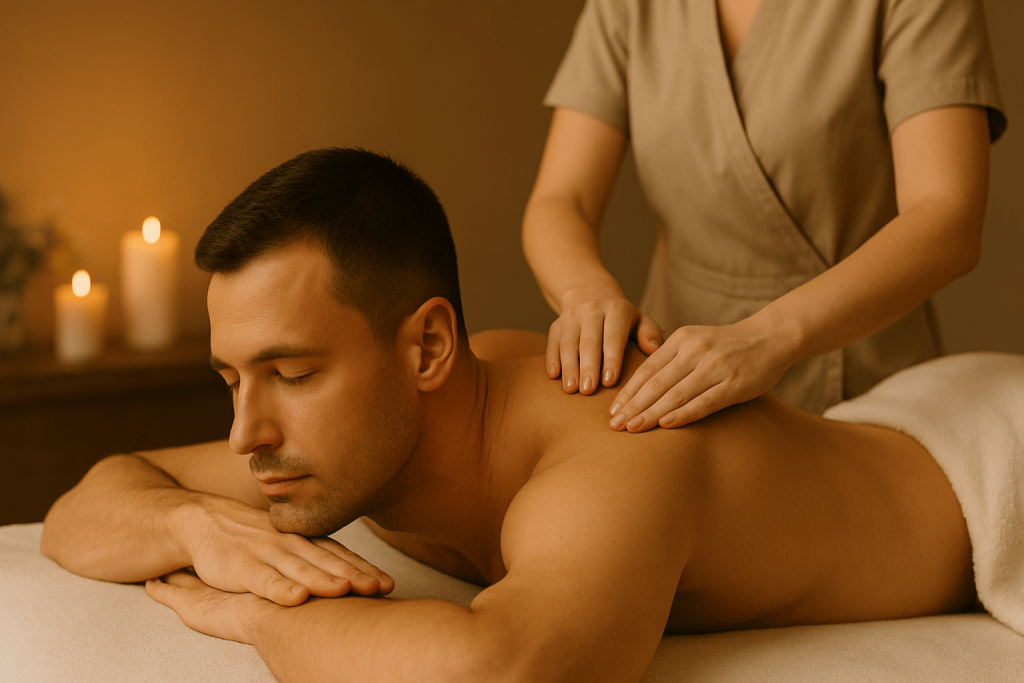
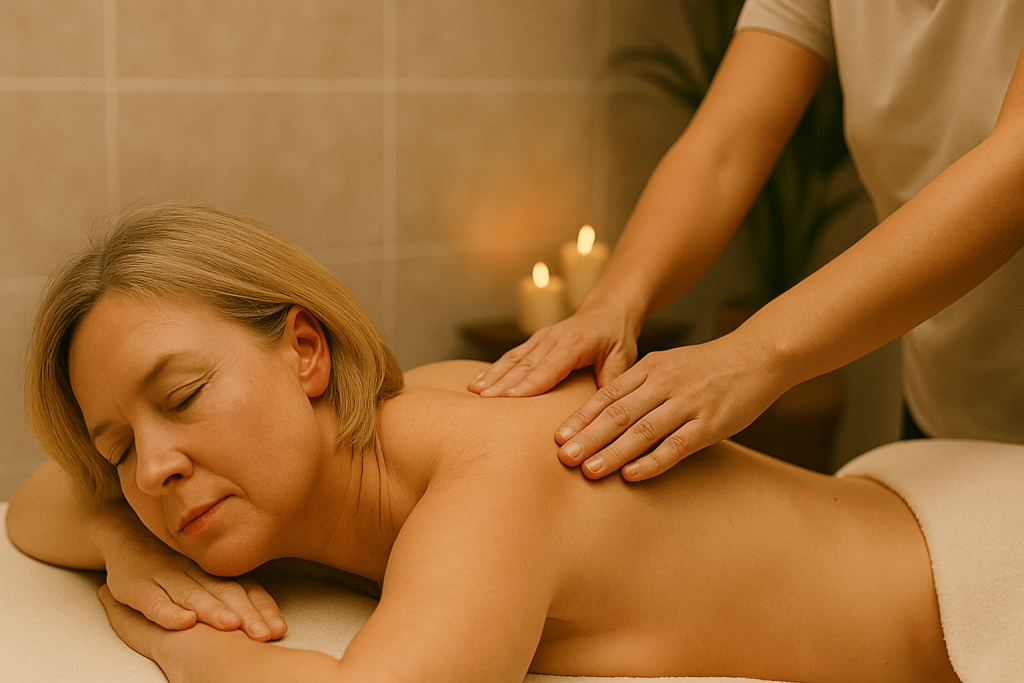
Your therapist starts at your shoulders and upper back. They work out tension in the muscles that connect directly to your neck and head. From there, they move up through your neck, then into your scalp. Expect a mix of kneading, tapping, and gentle pulling through your hair.
Many therapists also apply light pressure to specific points on your scalp and temples. These points connect to areas that often hold tension. This is especially true if you deal with headaches or eye strain from screen time. The session usually finishes with slow, calming strokes across your scalp and forehead. Many clients find this part deeply relaxing.
What are the real benefits of Indian head massage?
- Relief from tension headaches. A lot of tension headaches start in the muscles of your neck, shoulders, and scalp. Working directly on these areas often brings real relief, especially if you get headaches from stress or long hours at a screen.
- Less stiffness in your neck and shoulders. If you sit at a desk all day, tension tends to build up in exactly the areas this massage targets. Clients often notice a real difference in how freely they can move their neck afterward.
- Better circulation to your scalp. The kneading and gentle pulling motions boost blood flow to your scalp, which some people find supports healthier hair and a clearer, calmer feeling in the head.
- A genuinely calming effect on your mind. So much of the massage happens around your head and scalp. Many clients describe it as mentally clearing — it almost quiets a busy, overactive mind in a way other massages don’t quite reach.
- Improved focus afterward. Clients often say they feel noticeably more alert once the tension eases in their neck and shoulders. A lot of that built-up tightness was quietly draining their energy, without them even realising it.
What to expect during your session
You’ll usually sit in a comfortable, upright chair, fully clothed. Your therapist will ask where you’re feeling tension, particularly around your neck, shoulders, and head, before they begin.
The massage starts at your shoulders and works upward. You’ll feel firm kneading through your shoulders and upper back. This moves into your neck, then finishes with lighter work across your scalp and temples. Some therapists use a small amount of oil in your hair. Ask beforehand if you’d rather keep your hair oil-free.
Sessions typically run 30 to 45 minutes. Many clients feel noticeably lighter and clearer straight afterward, and some say the effects last for several days.
Indian head massage vs other treatments
Indian head massage focuses only on your head, neck, and shoulders. This makes it different from a full body massage like Swedish or deep tissue. If you’re mostly dealing with tension in your back or legs, a broader treatment will likely serve you better. Our guide comparing Swedish, deep tissue, and Thai massage can help you decide if a full body session suits you more.
Drawn to the calming, almost meditative feeling of this treatment, but want something even gentler? Reiki might also be worth exploring. It works with energy rather than touch on muscles. But many clients find the two share a similar sense of stillness and calm.
Who benefits most from Indian head massage?
This treatment suits you especially well if you spend long hours at a desk or on a screen, since tension tends to build up in exactly the areas it targets. It also helps if you get frequent tension headaches, or if you’re simply looking for a shorter, seated treatment that still delivers a real sense of relief. Many clients also book it during a lunch break, since it doesn’t require undressing or a full session length.
Signs you might benefit from Indian head massage
Not sure if it’s right for you? A few common signs suggest it’s worth booking. You spend most of your day at a desk or looking at a screen. You notice tension building in your neck and shoulders by the afternoon. You get headaches that seem to start at the base of your skull or across your temples. Or you simply want a shorter treatment that still leaves you feeling genuinely different afterward.
None of these are strict rules. If you’re curious, the simplest way to know is to try a session and notice how your body responds, both during and in the days after.
How often should you get Indian head massage?
For general stress and tension, once every two to four weeks works well for a lot of people. If you’re dealing with frequent headaches or particularly high stress at work, closer sessions for a short stretch can help, tapering off once things settle.
What to do after your session
A few small habits can help you get more from the treatment. Drink some water afterward, since this supports the increased circulation the massage creates. Try to avoid jumping straight into a stressful task if you can, giving yourself even ten quiet minutes to hold onto the calm. And if your therapist used oil in your hair, plan for a wash afterward rather than heading straight into an evening out.
Frequently asked questions
Do I need to remove my hair products before a session? Not necessarily, though let your therapist know if you’d prefer to avoid oil in your hair, especially if you have plans right after your appointment.
Is Indian head massage good for headaches? Yes, many clients find real relief from tension headaches, since the treatment works directly on the muscles that often contribute to that kind of pain.
Do I need to lie down for this treatment? No. You stay seated and fully clothed for the whole session, which makes it a convenient option if you’re short on time.
Can Indian head massage help with hair growth? Some clients believe the improved scalp circulation supports healthier hair, though results vary and it shouldn’t be seen as a guaranteed treatment for hair loss.
How is this different from a scalp massage at a hairdresser? A hairdresser’s scalp massage is usually brief and focused only on your scalp. Indian head massage is a longer, more complete treatment covering your shoulders, neck, and head together.
Will I feel sleepy afterward? Many clients feel deeply relaxed, sometimes almost sleepy, right after a session. It’s a good idea to take a few quiet minutes before jumping back into a busy afternoon.
Ready to book?
If your neck and shoulders are holding onto weeks of tension, or you simply want a calming treatment that fits into a short break in your day, Indian head massage is worth trying. Sessions run daily from 11am to 9pm at Unit 2A The Coombe, The Liberties, Dublin 8.
👉 Book your Indian head massage 📞 Call or text 089 252 4848 with any questions before you book 📸 Follow us on Instagram @healing.massage.reiki.dublin to see real sessions and results